There’s a moment every year when Ponce stops being just a city and becomes something else entirely. Streets turn into corridors of sound. Balconies become front-row seats to history. Ordinary sidewalks carry extraordinary meaning. This is what happens when carnival arrives.
The Carnival in Ponce, Puerto Rico is not about spectacle for outsiders. It is about continuity for those who live here. It is a ritual that reminds us—quietly and loudly at the same time—that culture is something we practice, not something we preserve behind glass.
A Carnival That Belongs to the People, Not the Calendar
Unlike many festivals that exist because of tourism seasons or marketing campaigns, the Ponce Carnival exists because the community insists on it. Long before planning committees and official programs, families were already preparing masks, sewing costumes, and teaching rhythms at home.
This is why the carnival feels different. It doesn’t start on opening day—it starts months before, in workshops, schools, garages, and conversations. When February arrives, what you see on the streets is the result of collective preparation, not production.
Vejigantes as Language, Not Costume
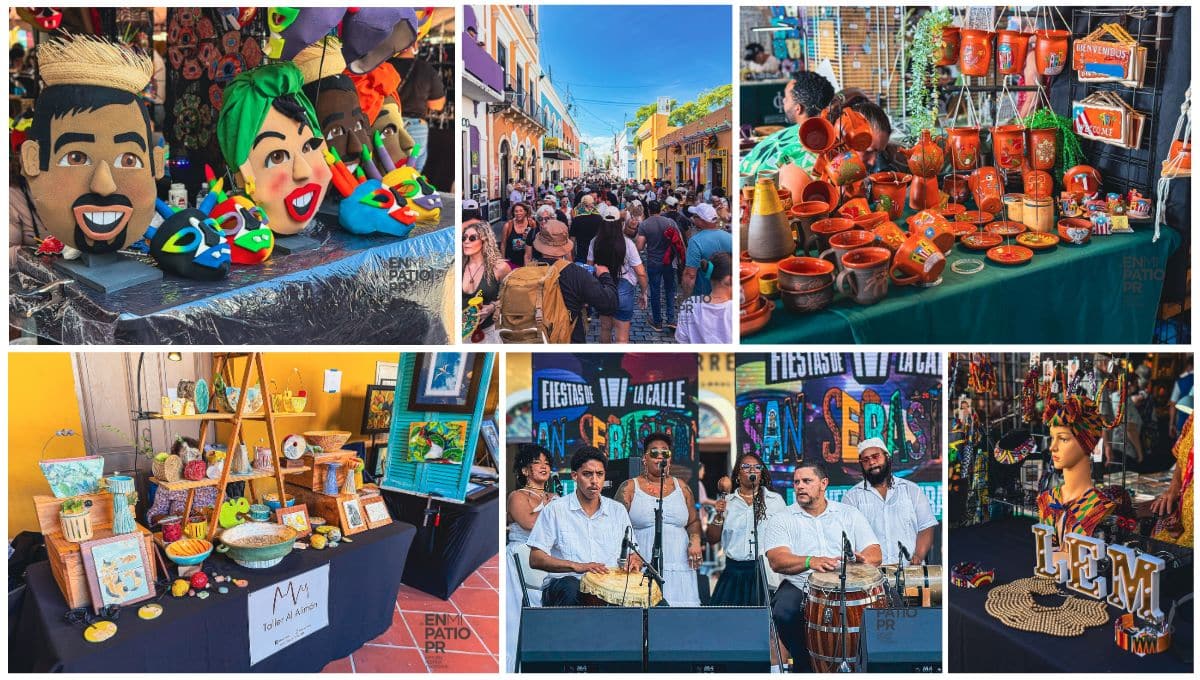
To understand the carnival, you have to understand the vejigantes—not as characters, but as language. Their exaggerated masks are not meant to be scary or decorative; they are meant to speak. Color, shape, horns, and expression all communicate ideas passed down through generations.
In Ponce, the vejigante is not an accessory. It is a statement. It represents the freedom to mock power, to exaggerate fear, and to turn history into movement. The act of wearing the mask is as meaningful as making it.
This is why so many families still create their own masks. Buying one is easy. Making one is identity.
Sound Before Sight: How Music Leads the Carnival
If you close your eyes during carnival, you’ll still know exactly where you are. The sound reaches you first. Drums echo before parades appear. Music spills down side streets long before floats arrive.
Bomba and plena don’t simply accompany the carnival—they guide it. They regulate pace, emotion, and energy. The city moves to rhythm, not schedule. This is why carnival never feels rushed, even when streets are full.
Music here is not background. It is direction.
The Role of Ritual in a Modern City
Carnival rituals—like the coronation of King Momo or the Burial of the Sardine—may seem playful on the surface, but they serve an important role. They allow a modern city to pause, laugh at itself, and reset.
The Burial of the Sardine, in particular, carries meaning beyond humor. It marks an intentional ending. Celebration gives way to reflection. Excess gives way to balance. Even in laughter, there is awareness.
In a fast-moving world, rituals like these remind us that cycles matter.
Carnival as Intergenerational Space
One of the most powerful aspects of the Ponce Carnival is how many generations share it at once. Children aren’t just watching; they’re participating. Elders aren’t just observing; they’re guiding.
You’ll see grandparents explaining why a mask looks a certain way. Parents pointing out details that might otherwise be missed. Teenagers finding their place between tradition and expression.
This is how culture survives—not through instruction, but through proximity.
What Happens to a City When Everyone Shows Up
During carnival week, Ponce operates differently. Small businesses extend hours. Neighbors greet each other more easily. Streets feel communal instead of transactional.
This shift matters. Cultural events like carnival don’t just celebrate identity—they reinforce social bonds. According to the Puerto Rico Tourism Company, large cultural festivals significantly increase local economic activity, but their social impact often lasts longer than their financial one.
People leave carnival more connected than when they arrived.
Why the Carnival Still Matters Now
In a time when so much feels temporary, the endurance of the Ponce Carnival offers something grounding. It reminds us that tradition does not resist change—it absorbs it, filters it, and keeps what matters.
The upcoming Ponce Carnival Puerto Rico 2026 will not be meaningful because it is new. It will be meaningful because it continues something that has never stopped.
And that continuity is rare.
Closing Reflection: Carnival Is Not a Show—It’s a Practice
The Carnival in Ponce, Puerto Rico is not something you attend once and check off a list. It is something you grow into. Something you inherit. Something you return to when you need to remember where you come from.
For those who want to understand Puerto Rico beyond headlines and hashtags, experiences like this matter. At EnMiPatioPR, we focus on documenting and sharing these moments because culture lives where people practice it—day after day, year after year.
If you’re exploring the island through a puerto rico visitor guide, make sure it leads you not just to places, but to traditions that still breathe. Carnival in Ponce is one of them.